How We Built an Agentic AI System to Automate LinkedIn Case Studies
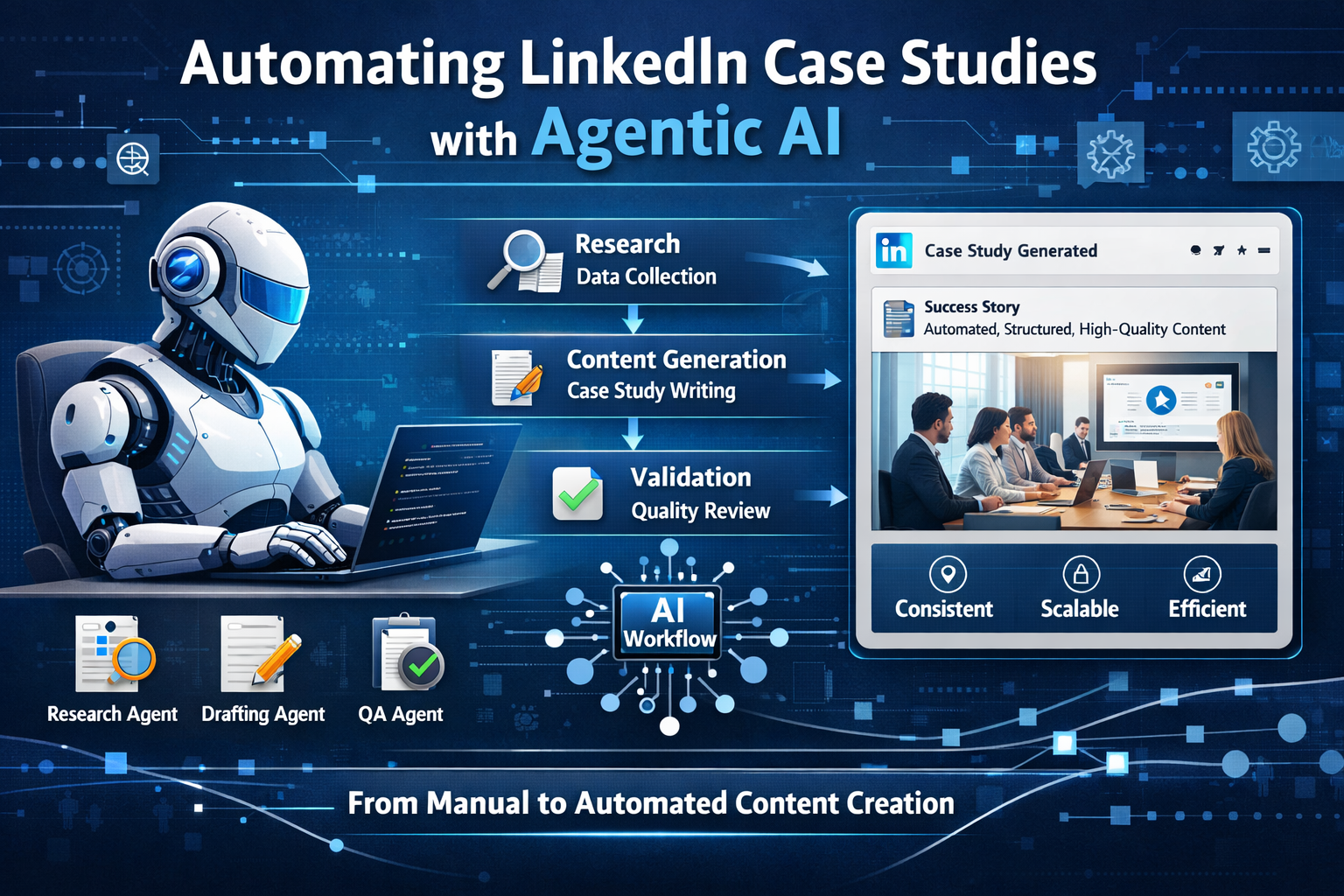
This case study explores how ToDo IT designed and implemented an Agentic AI system to automatically generate structured, high-quality LinkedIn case studies—eliminating repetitive manual writing while maintaining clarity, consistency, and professional tone.
The Problem
Writing LinkedIn case studies manually is time-consuming and error-prone. Each post requires research, structuring, rewriting, and formatting—often repeated for similar projects. This leads to inconsistency in quality and wasted engineering and marketing bandwidth.
The Solution
We built an agentic AI workflow that breaks the case study creation process into multiple intelligent steps. Each agent has a single responsibility— from understanding raw inputs to structuring narratives and validating output— ensuring accuracy and relevance at every stage.
- Multi-step agent-based reasoning pipeline
- Automated case study structure generation
- Context-aware prompt orchestration
- Consistent LinkedIn-ready tone and formatting
- Reduced manual writing and review effort
- Scalable content generation workflow
Architecture Highlights
The system uses a modular agent design where each agent performs a focused task— such as extracting key project details, drafting sections, refining language, and validating output quality. This separation of concerns makes the system easy to extend and maintain.
Results & Impact
By introducing agentic AI into the content workflow, case study creation time was reduced drastically while maintaining a professional, human-like narrative. The system now produces repeatable, high-quality LinkedIn case studies with minimal manual intervention.
Conclusion
This project demonstrates how agentic AI can move beyond simple text generation and into structured, production-ready content workflows. By treating AI as a system of collaborators rather than a single prompt, we unlocked scalability, reliability, and real-world usability.